IPF Approved List 2026: How to Check Competition Gear
Buying powerlifting gear for an IPF meet gets confusing faster than it should.
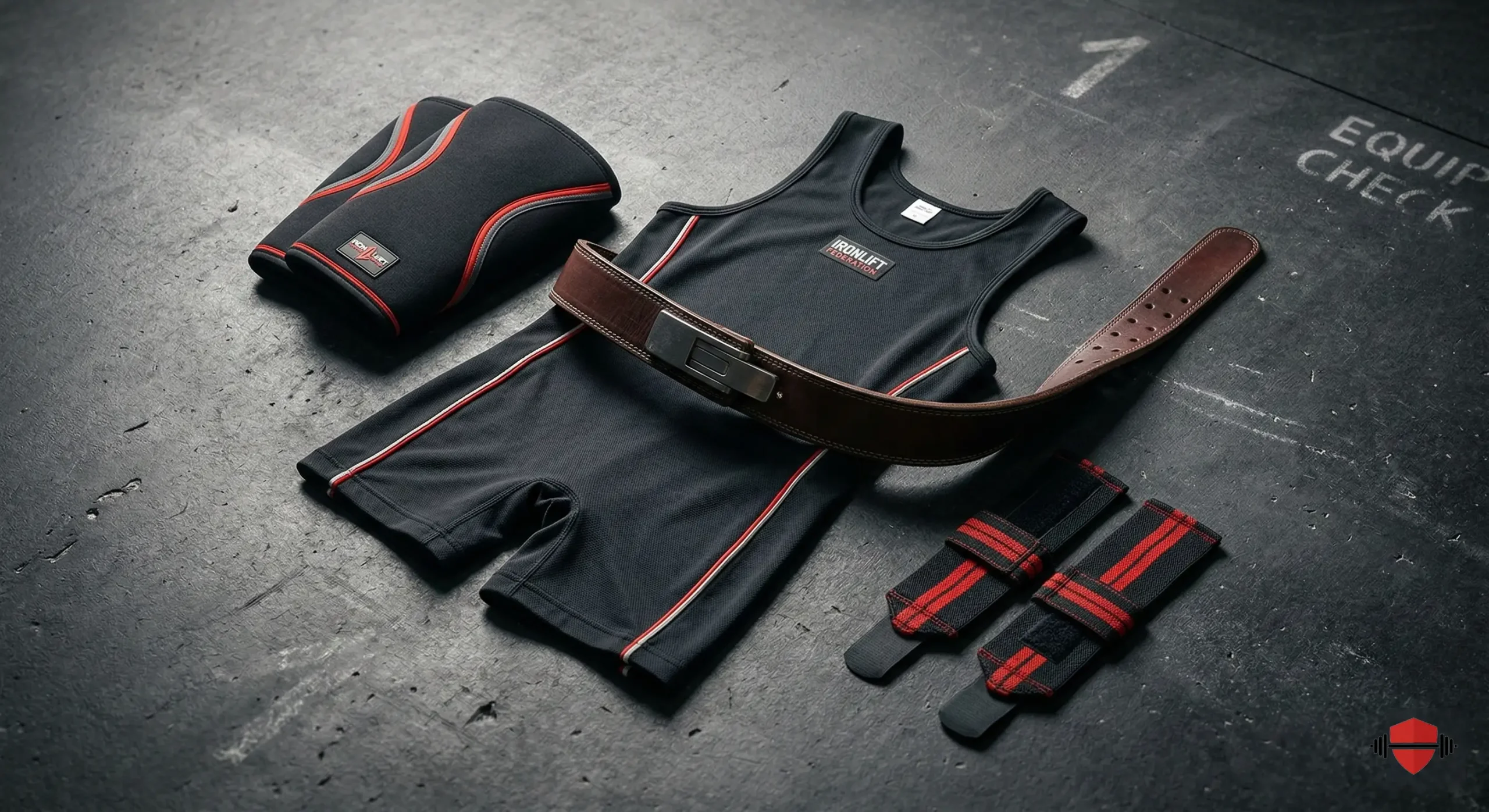
A belt can be perfectly legal in size and still not be accepted because the manufacturer or model is not on the current Approved List. A pair of shoes does not work the same way. Knee sleeves have their own approval requirement, while an ordinary T-shirt is mainly governed by construction and logo rules.
Then there are the exceptions.
Equipment can disappear from the main list and remain temporarily usable. A removal decision can be reversed. A brand that was approved when you bought something may no longer have the same status by the time your meet arrives.
That is why checking whether gear is “IPF legal” should not begin with a brand logo, an Amazon title, or a product description.
It should begin with the current IPF rules and the exact item you plan to bring to the meet.
Table of Contents
The Short Answer
The current IPF Approved List covers the 2023–2026 approval period and is valid through December 31, 2026.
For gear that requires approval, do not stop after finding the manufacturer.
manufacturer → exact product → IPF ID → Classic/Equipped designation → current IPF notices
That last step matters more than it used to.
During the current approval cycle, the IPF has issued separate notices affecting Hansu, STOIC and several stiff knee sleeve models. A saved PDF or an old screenshot may therefore tell only part of the story.
Use the official IPF Approved List page as your starting point, then check current notices before an important meet.
What Does “IPF Approved” Actually Mean?
People often talk about an “IPF-approved brand,” but that wording can be misleading.
Approval is not a blanket promise that everything a company sells can be taken onto an IPF platform.
The official list identifies specific pieces of equipment. Entries are tied to product names and, in many cases, an IPF ID number.
Gymreapers is a good example.
The current list includes entries such as the Gymreapers Singlet, Knee Sleeves, Wrist Wraps and specific belt types. That does not mean a completely different Gymreapers accessory automatically becomes competition equipment just because the same logo is printed on it.
The same principle applies when shopping used.
A seller saying “this is an IPF belt” is not enough. You want to know which belt it actually is.
If the name on the product, packaging or original order does not clearly match what appears on the official list, investigate before meet day rather than trying to settle the question at equipment inspection.
If terms such as Classic, Equipped or IPF ID are new to you, our Powerlifting Glossary explains the competition language used throughout the site.
Which Personal Gear Needs to Be on the Approved List?
For the equipment most lifters care about, the distinction is fairly straightforward once you separate approval from technical specifications.
Singlets
A non-supportive singlet is required for Classic competition. It may also be worn in Equipped competition instead of a supportive lifting suit.
The singlet must come from a manufacturer accepted onto the IPF Approved List and still has to satisfy the construction rules in the Technical Rulebook.
So finding the brand name is only the first check.
Powerlifting Belts
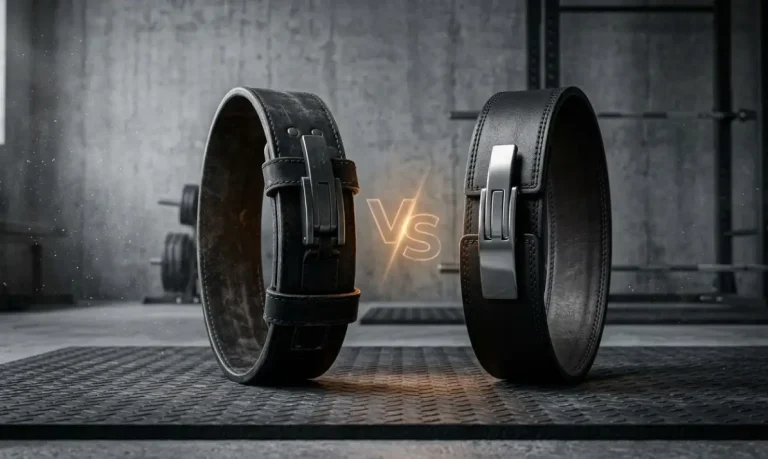
Belts used in IPF competition must come from manufacturers accepted onto the Approved List.
They also have dimensional limits.
The main ones are:
- maximum width: 10 cm
- maximum thickness: 13 mm
- one-prong, two-prong and lever-style buckles are permitted when the belt otherwise meets the rules
This is an important distinction.
A 13 mm, 4-inch powerlifting belt is not automatically IPF-approved just because its dimensions look right. The approval requirement and the dimensional requirement both matter.
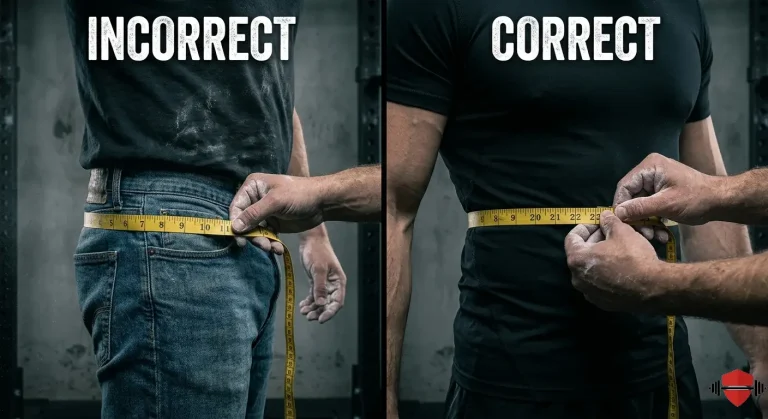
If you are still choosing a belt size, use our Powerlifting Belt Sizing Guide. Competition dimensions and your personal belt size are separate questions.
Knee Sleeves
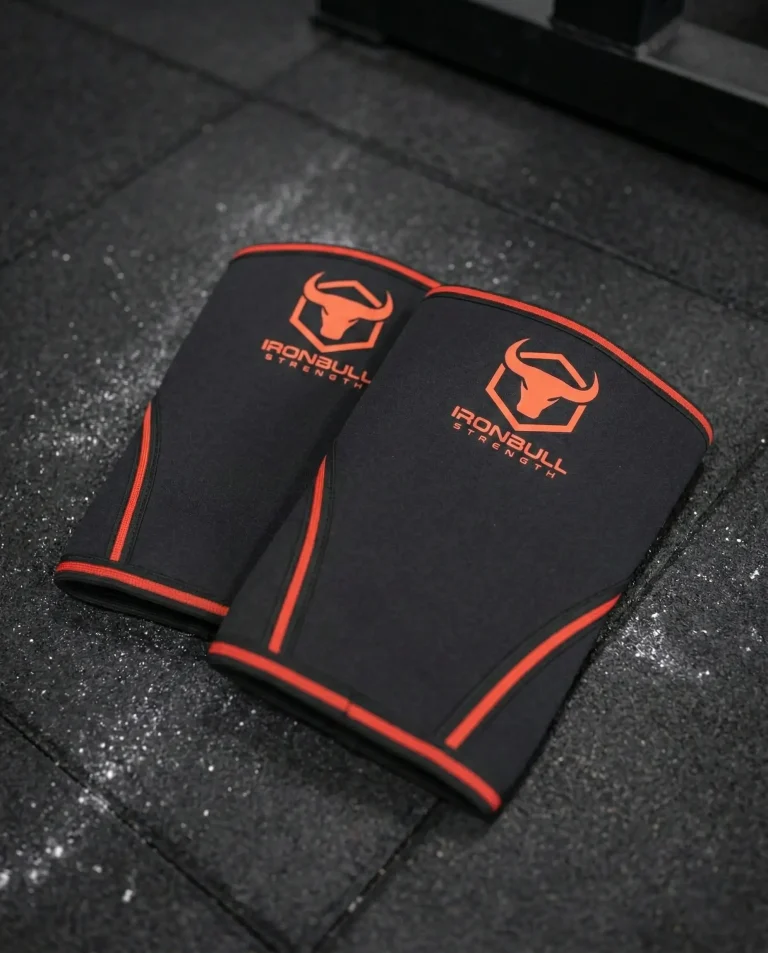
Knee sleeves also require approval.
Under the current rulebook, sleeves may be no more than:
- 7 mm thick
- 30 cm long
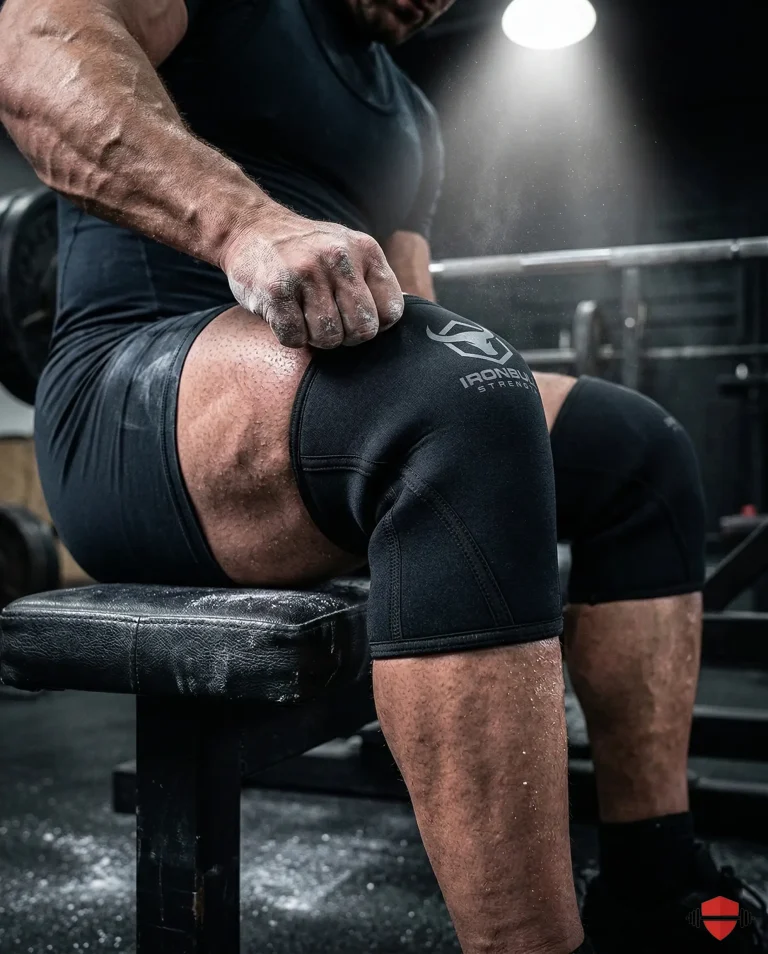
They must be continuous neoprene cylinders without added straps, Velcro, drawstrings or similar supportive devices.
They are centered over the knee joint, and knee sleeves cannot be combined with knee wraps.
Again, “7 mm knee sleeve” describes a type of product. It does not by itself tell you whether that particular sleeve is accepted for IPF competition.
For the practical fit side of the rule, see How to Put On Tight Knee Sleeves.
Wrist Wraps
Supportive wrist wraps must come from approved manufacturers and are limited to:
- 1 m in length
- 8 cm in width
This is one of the rules worth checking carefully because two-meter wrist wraps are sometimes discussed online in the context of equipped lifting.
The current IPF rule is still one meter for wrist wraps.
The two-meter limit belongs to knee wraps.
If you are deciding between different levels of stiffness, our Flexible vs Stiff Wrist Wraps guide covers training differences separately from federation legality.
Knee Wraps
Knee wraps may be used only in competitions designated as Equipped.
The current limits are:
- maximum length: 2 m
- maximum width: 8 cm
The wrap may extend no farther than 15 cm above and 15 cm below the center of the knee joint.
Knee wraps and knee sleeves cannot be worn together.
Supportive Suits and Bench Shirts
Supportive lifting suits and supportive shirts are Equipped gear and must meet the IPF approval rules for those categories.
One point that causes unnecessary confusion: competing Equipped does not mean every lifter must own a separate “deadlift suit.”
The rulebook allows a supportive lifting suit in Equipped competition, while a non-supportive singlet may also be worn instead.
What Does Not Work the Same Way?
Not every item touching your body has to appear as a specific model in the Approved List.
Standard T-shirts, briefs, socks and footwear are governed primarily by their own technical requirements and, where relevant, logo rules.
That makes them different from a belt or pair of knee sleeves.
T-Shirts
The current rulebook requires a T-shirt under the lifting singlet in the squat, bench press and deadlift, unless a permitted supportive shirt is being worn instead in Equipped competition. It also gives specific rules for material, fit, sleeves and logos.
A regular competition T-shirt is therefore something you check against the Technical Rulebook, rather than assuming it needs the same model-by-model listing used for knee sleeves or belts.
Supportive bench shirts are different. Those are Equipped equipment and do require approval.
Briefs
Standard commercial briefs or an athletic supporter are permitted under the lifting suit, subject to the rulebook specifications.
Supportive underwear is not permitted.
Socks
Regular socks have their own rules.
For the deadlift, shin-length socks must be worn to cover and protect the shins.
Sock length also matters around knee equipment: socks must not interfere with knee wraps or knee sleeves in a way that violates the positioning rules.
Shoes and Deadlift Slippers
Shoes or boots must be worn.
Permitted footwear includes indoor sports shoes, weightlifting or powerlifting shoes, and deadlift slippers.
The rule people sometimes miss is the sole:
sole thickness may not exceed 5 cm at any point.
The underside must also be flat, without projections or modifications to the normal design, and the footwear needs to be properly fastened when the lifter is on the platform.
So there is no need to hunt for an “IPF Approved shoe model” in the same way you would search for knee sleeves.
You do need footwear that satisfies the actual footwear rules.
A Quick 2026 Equipment Limits Reference
| Item | Current IPF limit |
|---|---|
| Belt | 10 cm maximum width; 13 mm maximum thickness |
| Knee sleeves | 7 mm maximum thickness; 30 cm maximum length |
| Wrist wraps | 1 m maximum length; 8 cm maximum width |
| Knee wraps | 2 m maximum length; 8 cm maximum width; Equipped only |
| Shoes / boots | Sole no thicker than 5 cm |
| Knee sleeves + knee wraps | Cannot be worn together |
These dimensions are useful for screening gear, but they do not replace approval where approval is required.
A belt can meet the 10 cm and 13 mm limits and still fail the approval check.
For the full wording, check the 2026 IPF Technical Rulebook, Version 3.
How to Verify an IPF-Approved Product
This takes a few minutes at home. That is much better than trying to figure it out in a warm-up room.
1. Start With the Official IPF Approved List
Use the Approved List published by the International Powerlifting Federation.
For 2026, the current approval period runs through December 31.
Avoid using a retailer's “IPF approved” filter as your final source.
Retail pages are useful for shopping. The federation decides what is accepted at an IPF meet.
2. Find the Manufacturer
Search the official list for the company that made your gear.
If the manufacturer is not there, do not assume a product is approved because it looks identical to another legal item.
3. Match the Exact Product
This is where many quick checks go wrong.
Do not stop when you see the brand.
Compare the actual product name with the entry in the list.
For a belt, that may mean distinguishing a lever belt from a single-prong model. For knee sleeves, a company may sell several versions with different approval histories.
4. Check the IPF ID
The IPF introduced ID numbers to make equipment easier to identify.
Where an IPF ID is listed, use it.
It gives you a much stronger match than “same brand, same color, probably the same sleeve.”
5. Check Whether It Is Listed for Classic, Equipped or Both
Some equipment is usable in both divisions.
Other equipment is specific to Equipped.
Knee wraps are the obvious example: they are Equipped equipment.
Do not assume that a product appearing somewhere in the PDF means it belongs in your division.
6. Check Current Removal and Transition Notices
This is now an essential part of the process.
The main list is not the only document that can affect whether something is usable on a particular date.
Before an important meet, check the IPF's current notices and the Equipment Removed / Temporary Use link on the official Approved List page.
That is how you catch cases like STOIC.
Why Old Screenshots Can Be Wrong: Hansu, STOIC and the Stiff Sleeve Changes
The 2023–2026 approval period has produced several good examples of why a static “approved brands” chart ages badly.
Hansu Power
In April 2025, the IPF announced the immediate removal of all Hansu Power apparel and equipment that had been on its Approved List.
A later decision created a limited exception for Hansu hardware only at national-level competitions and below through the end of the current approval period.
That hardware exception should not be read as reinstating Hansu lifter apparel.
So if an old article still shows Hansu belts, singlets, sleeves and wraps with simple green check marks, that chart is no longer a reliable way to prepare for a meet.
Read the original Hansu removal statement.
STOIC
STOIC is a different situation.
In January 2026, the IPF announced that STOIC had been removed from the Approved Apparel and Equipment List.
But the federation also gave athletes a transition period.
STOIC apparel and equipment may continue to be used in IPF-recognized national and international competition through December 31, 2026.
After that date, the equipment will no longer be eligible under that transition.
This is a perfect example of why “not on the normal list anymore” and “illegal today” are not always the same statement.
Read the official STOIC transition notice.
The 2025 Stiff Knee Sleeve Reversal
Another unusual case involved several extra-stiff knee sleeves.
The IPF initially announced in April 2025 that a group of sleeves would be removed.
In May, it reversed the decision for six of those models.
The affected sleeves from Inzer, Titan, ONI, Strength Shop, Fortex and A7 were allowed to continue in IPF-sanctioned competitions through the end of 2026.
Hansu was not part of that six-model reversal.
If you own one of the stiff sleeves involved in those announcements, checking the original removal notice alone can therefore lead you to the wrong conclusion.
Read the later update too: IPF EC reversal concerning stiff knee sleeves.
Do You Need an “IPF Approved” Logo on the Gear?
Do not use a supposed approval patch as your main verification method.
The IPF's current identification system is built around the official equipment list, product identification and IPF ID numbers.
The Technical Rulebook does regulate manufacturer and sponsor logos, but that is a different issue from proving that a belt or sleeve is an approved model.
There is no useful universal rule that says:
“The IPF patch is faded, therefore the gear is illegal.”
Instead, verify the actual item against the official records.
This matters especially with older equipment, used gear and products whose branding has changed slightly over time.
What Happens at Equipment Inspection?
Equipment inspection is not meant to be a surprise exam.
It is a final check that what you intend to wear complies with the rules.
Under the current Technical Rulebook, personal equipment inspection can take place during the meet at the announced time, up to the period shortly before the lifter's bodyweight category begins.
At least two referees are assigned to the inspection.
Items are examined before being officially marked or approved for competition.
There are a couple of practical details worth knowing.
If wraps are too long, they can be rejected, cut to the permitted length and presented again.
An item that is unclean or torn can also be rejected.
And this is where the distinction between rejection and disqualification matters.
If a referee rejects an item at inspection, that does not automatically mean you are thrown out of the meet. It means you cannot use that item unless the problem can be corrected and it passes inspection.
The much more serious problem is using an illegal item on the platform after inspection.
The rulebook provides for disqualification when a lifter appears on the platform using illegal equipment, apart from circumstances where an item was inadvertently passed by the referees.
The Most Common Ways Lifters Get This Wrong
Most gear problems do not come from someone deliberately trying to break a rule.
They come from shortcuts.
Checking the Brand Instead of the Model
“My belt is Gymreapers” is not a complete verification.
Which Gymreapers belt?
The official list contains particular belt types and IDs. Check the one you actually own.
Assuming the Product Page Is Current
A retailer can keep “IPF approved” in a product description after rules, licensing or approval status changes.
That label can be useful, but the IPF source wins.
Using an Old Approved List
The current cycle may run for several years, but things can still change inside that cycle.
Hansu and STOIC make that very clear.
Confusing Technical Dimensions With Approval
A 13 mm belt is not automatically approved.
A 7 mm knee sleeve is not automatically approved.
Dimensions tell you whether the product fits one part of the rule. They do not establish its approval status.
Our IBRO vs Gymreapers 10mm Lever Belt comparison is a useful reminder that two products can look similar on paper while competition status still has to be checked model by model.
Applying Equipped Rules to Classic — or the Other Way Around
Two-meter knee wraps are legal equipment in the right context.
That context is Equipped competition.
They are not two-meter wrist wraps, and they are not Classic knee equipment.
Waiting Until Meet Morning
If something is unclear, check it early.
That gives you time to contact the meet director or federation, replace an item, or bring a backup rather than trying to solve the problem while your flight is warming up.
A Simple Pre-Meet Gear Check
A week or two before the meet, put everything you plan to wear in one place.
Then go through it item by item.
For gear that requires approval:
- Find the manufacturer on the current IPF list.
- Match the exact product.
- Check the IPF ID where one is provided.
- Confirm the division designation.
- Check recent removal or transition notices.
Then check the technical details.
Is the belt within the dimensional limits?
Are your wrist wraps one meter or shorter?
Are your knee wraps two meters or shorter and being used only for Equipped?
Are your knee sleeves within the thickness and length limits?
Does your footwear meet the sole rule?
Are your deadlift socks packed?
Finally, inspect the condition of the gear itself.
Do not show up with torn equipment and assume that because the model is approved, its condition no longer matters.
Approval gets the product through one door.
It still has to comply with the rules when you bring it to inspection.
One More Thing: The Current Approval Cycle Ends in 2026
The present Approved List is valid through December 31, 2026.
That date matters if you are buying gear late in the year.
A product that is a perfectly reasonable choice for an October 2026 meet should not automatically be described as “future-proof” for the next approval period.
If you compete in 2027, check the new IPF list and rules before assuming your 2026 status carries over unchanged.
Competition equipment rules are something you verify, not something you verify once for life.
Related Powerlifting Gear Guides
- Powerlifting Glossary — competition terms, divisions and meet language.
- Powerlifting Belt Sizing Guide — how to measure and use manufacturer size charts.
- How to Put On Tight Knee Sleeves — practical sleeve positioning and fit checks.
- SBD Knee Sleeves Compared — differences among SBD's current sleeve types.
- Gymreapers 7mm Knee Sleeves — fit, sizing and training notes for the current model.
- SBD Flexible Wrist Wraps — length, fit and support for pressing.
Frequently Asked Questions
Do powerlifting shoes have to be IPF approved?
Shoes are governed by the IPF footwear rules rather than the same model-by-model Approved List requirement used for belts and knee sleeves. Current rules allow qualifying indoor sports shoes, weightlifting or powerlifting shoes, and deadlift slippers. The sole may not exceed 5 cm in thickness at any point.
Do knee sleeves need to be IPF approved?
Yes. Knee sleeves used in IPF competition must meet the technical rules and come from manufacturers accepted on the current Approved List. The current maximum dimensions are 7 mm thick and 30 cm long.
Are 2-meter wrist wraps legal in IPF competition?
No. Current IPF wrist wraps are limited to 1 meter in length and 8 cm in width.
The 2-meter maximum applies to knee wraps used in Equipped competition.
Can I wear knee wraps in Classic powerlifting?
No. Knee wraps are permitted only in competitions designated as Equipped.
IPF-approved knee sleeves are the relevant knee support option under the Classic rules.
Can I wear knee sleeves and knee wraps together in Equipped?
No. The rulebook specifically prohibits combining the two.
Is a supportive deadlift suit mandatory in Equipped competition?
No. Equipped competition permits supportive lifting suits, but the rules also allow a non-supportive singlet instead. A separate supportive “deadlift suit” is not a universal requirement for every Equipped lifter.
Can I still use STOIC gear in 2026?
Under the IPF's January 2026 transition notice, STOIC apparel and equipment may continue to be used in IPF-recognized national and international competitions through December 31, 2026.
That temporary permission ends after that date unless the IPF issues another update.
Is Hansu apparel currently IPF approved?
The IPF removed Hansu Power apparel and equipment from the Approved List in April 2025.
A later exception applies to Hansu hardware only at national level and below through December 31, 2026. That announcement does not reinstate Hansu lifter apparel.
Will I be disqualified if one item fails equipment inspection?
Not simply because an item is rejected during inspection.
An item that does not comply cannot be used, and some problems can be corrected before it is presented again. The more serious disqualification rule applies when illegal equipment is used on the platform after inspection, subject to the exceptions described in the Technical Rulebook.
How can I tell if my exact belt or knee sleeve is approved?
Use the official IPF Approved List and match the manufacturer, exact product name and IPF ID where listed.
Do not rely on the brand name alone.
Official Sources to Check Before Your Meet
For competition questions, use the federation's own documents as the final reference:
- IPF Approved List of Apparel and Equipment for Use at IPF Sanctioned Competitions — current approval page and temporary-use notices, valid through December 31, 2026.
- 2026 IPF Technical Rulebook, Version 3 — effective March 1, 2026.
- Hansu Power Apparel and Equipment Statement.
- Hansu Power Hardware-Only National-Level Exception.
- Update to IPF Approved Apparel and Equipment List — STOIC.
- IPF EC Reversal Concerning Stiff Knee Sleeves.
Rules and approval status can change.
If your meet is important enough to train months for, it is worth spending five minutes checking your gear against the current federation documents before you pack your bag.