
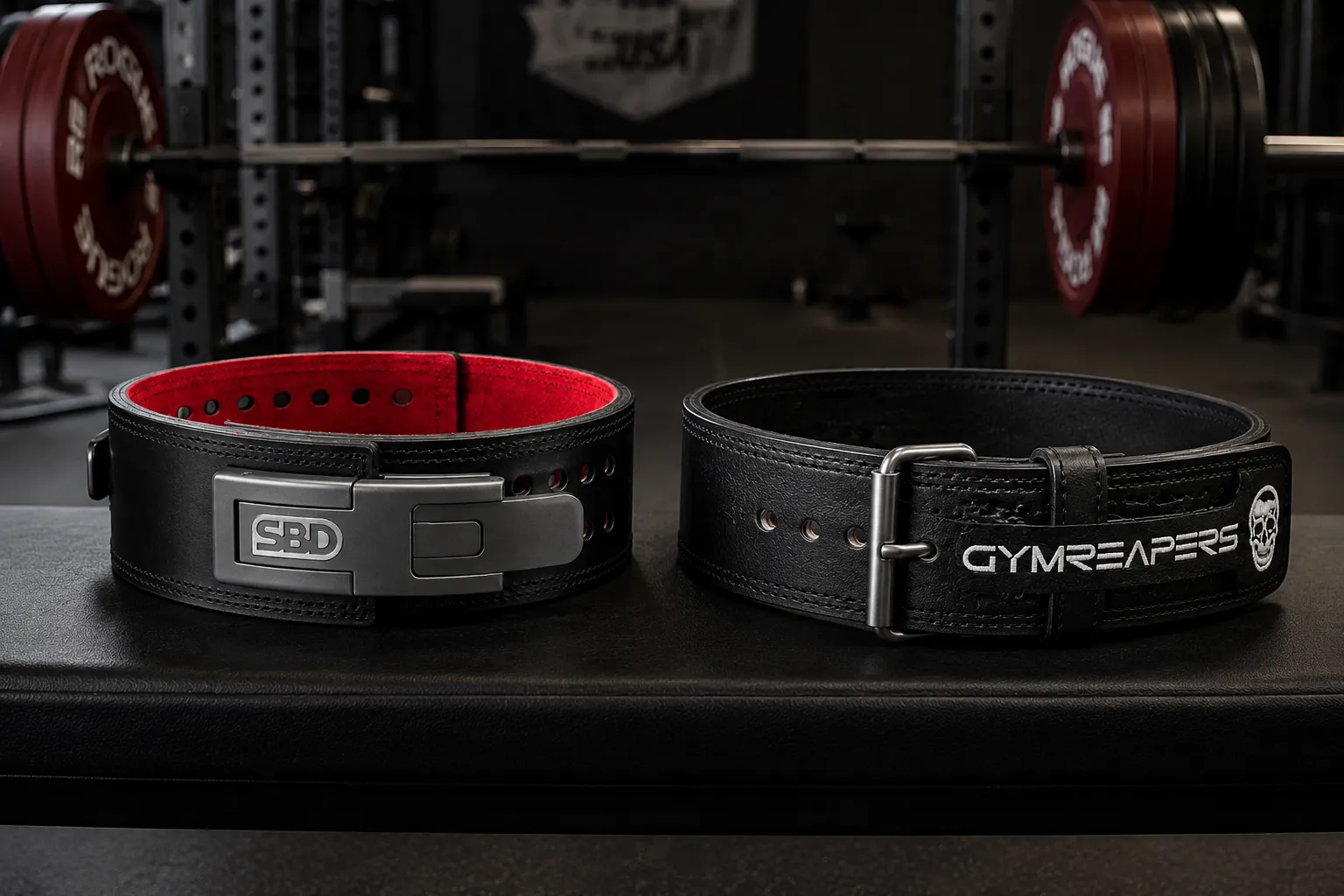
Lever vs Prong Lifting Belts: Which One Makes More Sense for Powerlifting?
Lever belts get most of the attention in modern powerlifting.
They look serious, close with one satisfying movement, and once the lever is set, the belt returns to essentially the same circumference every time you put it on.
A prong belt looks almost old-fashioned beside one.
But that does not make it obsolete.
The prong's biggest advantage is something a traditional lever belt is actually bad at: changing the fit whenever you want.
Want the belt one hole looser for deadlifts than squats?
Easy.
Training in a sweatshirt today?
Easy.
Waist feels a little different after a big meal or a change in bodyweight?
Again, easy.
That is the real lever-versus-prong decision.
Lever: repeatability and speed.
Prong: adjustability without tools.
Neither mechanism automatically gives you a better brace.
Table of Contents
The quick comparison
| Lever Belt | Prong Belt | |
|---|---|---|
| Putting it on | Very fast once adjusted | Slower |
| Taking it off | Very fast | Slower |
| Same fit every set | Excellent | Depends on hole/tension |
| Changing tightness | Inconvenient on traditional levers | Very easy |
| Different setting for squat/deadlift | Usually requires adjustment | One-hole change |
| Buckle profile | Usually larger | Usually smaller |
| Learning curve | Setup once, then simple | Familiar buckle system |
| Competition use | Allowed if compliant/approved | Allowed if compliant/approved |
| Best reason to choose it | Repeatable fit | Flexible adjustment |
That is the comparison in one table.
The rest comes down to how you train.
Why lever belts became so popular
A traditional lever belt has one very satisfying quality:
once it is set correctly, there is very little decision-making left.
Hook the lever.
Close it.
Lift.
Open it after the set.
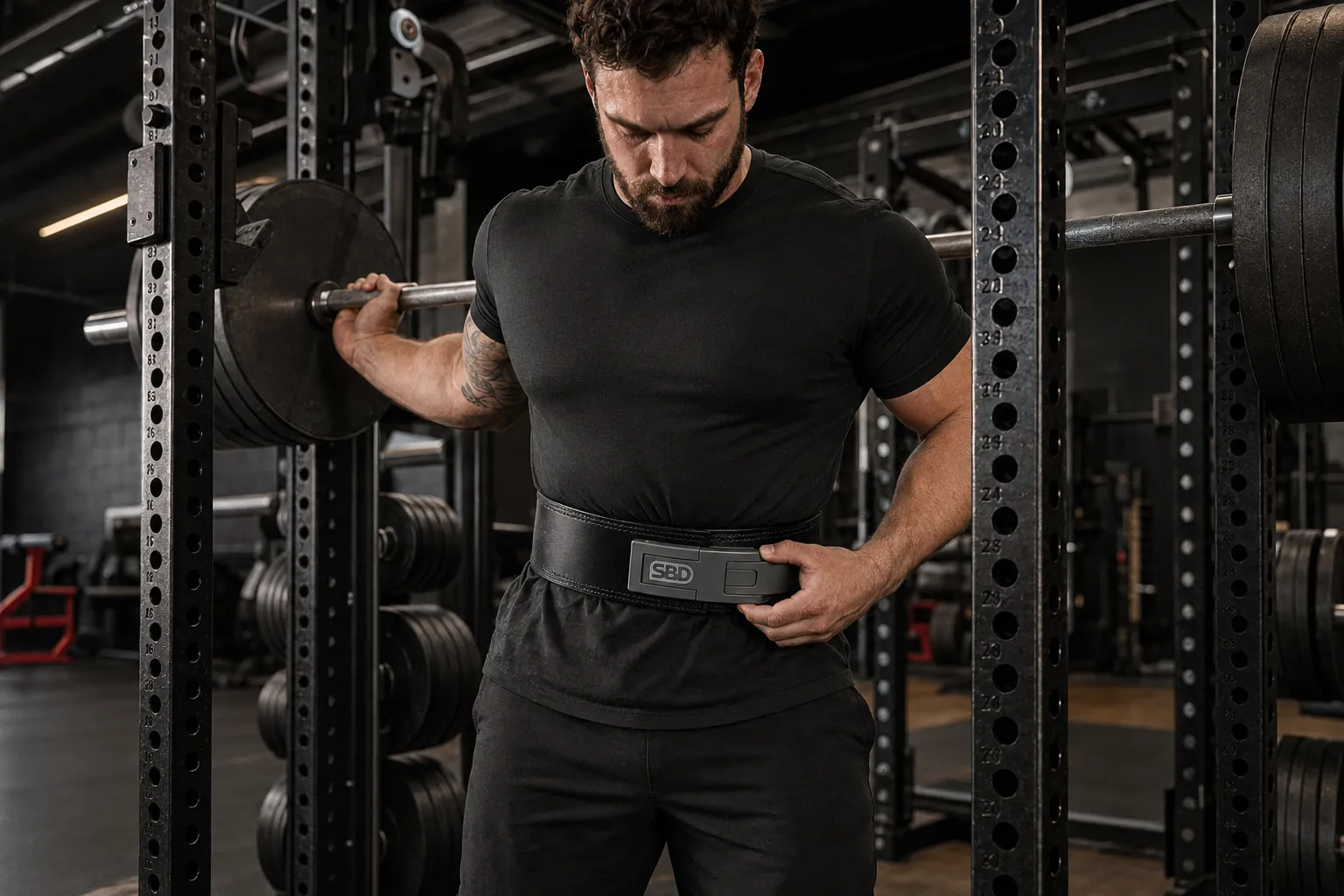
Iron Bull describes this as the main advantage of the mechanism: speed and repeatability. Once the lever position has been set, closing it recreates essentially the same belt circumference rather than asking you to pull the tongue through a buckle and find the same tension every time.
For heavy squat sessions, that can be genuinely convenient.
You do not need to think about whether this set is one hole tighter than the last one.
The belt either closes in its normal position or it does not.
That consistency is one reason lever belts make so much sense for lifters who use roughly the same belt position and tightness every time they squat.
The lever's weakness appears when you want a different fit
Imagine that you squat with your belt very snug.
Then deadlift day comes.
You prefer the belt slightly higher and one setting looser because the tighter position feels crowded when you bend toward the bar.
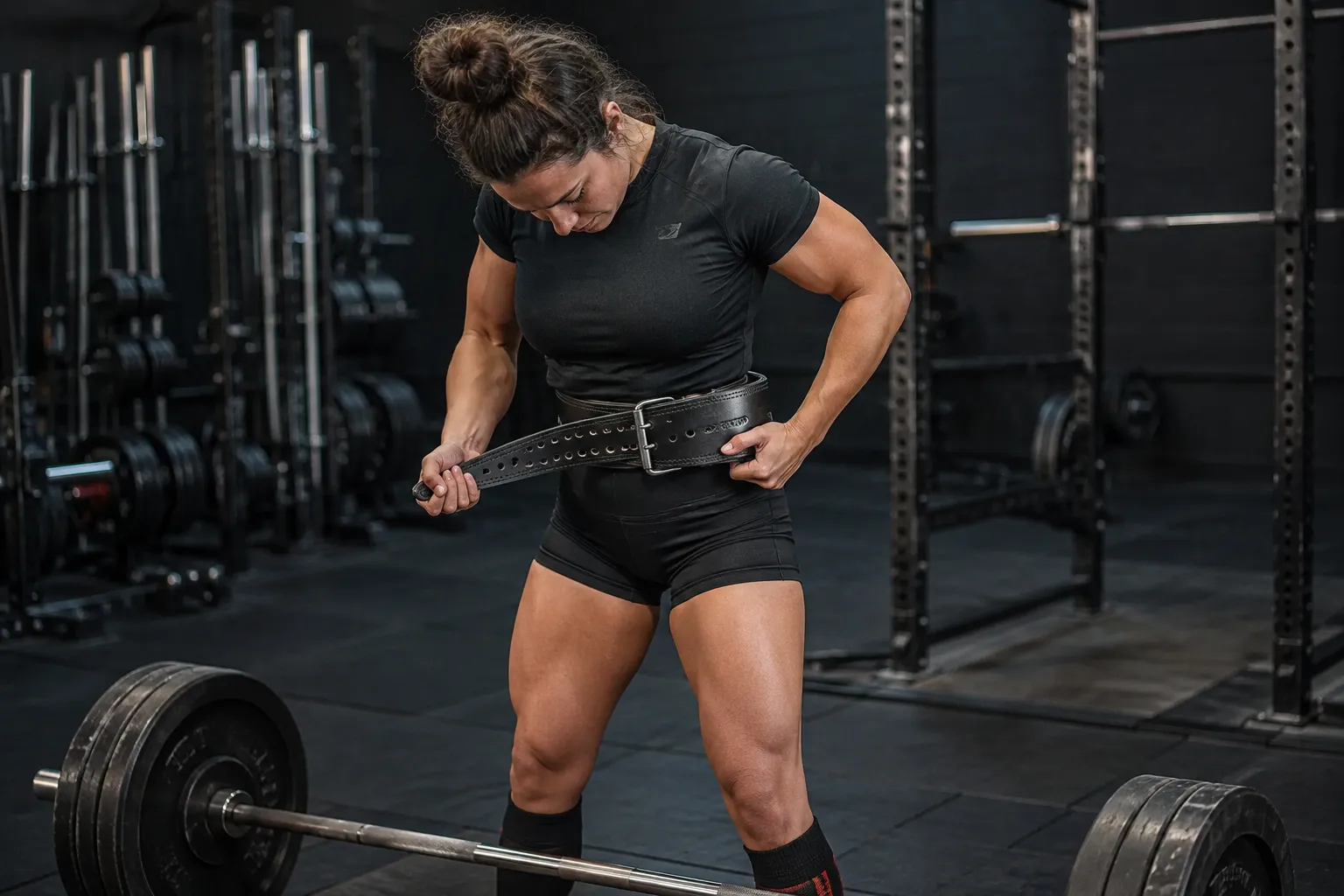
With a prong belt, you simply use a different hole.
With many traditional lever belts, the lever itself has to be unscrewed, moved to another set of mounting holes, and tightened again. Iron Bull identifies this as the main trade-off of the traditional lever design.
That is not a huge problem if your setup rarely changes.
It becomes annoying if it changes every workout.
And your waist is not a fixed object either.
Bodyweight changes.
Clothing changes.
How bloated you feel changes.
Even how tightly you want the belt can change between a heavy single and a longer volume session.
This is exactly where the prong belt starts looking much less old-fashioned.
Prong belts are simple for a reason
A prong belt works like a very heavy-duty version of a normal belt.
Pull the tongue through.
Choose a hole.
Secure the prong.
Done.
Single-prong and double-prong versions both exist, and the current IPF Technical Rulebook explicitly allows a belt buckle with either one or two prongs. It also permits a quick-release type, which the rulebook identifies as a lever.
The useful part of the prong system is not nostalgia.
It is that every hole remains available every time you put the belt on.
Iron Bull's current product guidance describes prong belts in exactly that way: the user can readily change tightness for different exercises or longer sessions without repositioning hardware.
Gymreapers makes the same distinction in its lever-versus-prong guidance: prong belts give the lifter more freedom to alter tightness from one movement or training day to another.
For someone who likes one setting for squats and another for deadlifts, that is a very real advantage.
Does a lever belt get tighter?
This question gets exaggerated.
A lever mechanism gives you mechanical advantage when closing the belt, so it can make a very snug setting easier to lock into. Iron Bull notes that both systems can be worn extremely tight, however, and that tighter is not automatically better.
That is the important part.
A lever belt is not automatically giving your torso more "support" just because you needed less effort to close the buckle.
The belt still has to allow you to take the breath you need and brace outward against it.
If the setting is so aggressive that you cannot properly expand your trunk, the fact that the lever closed successfully is not much of a victory.
Choose the mechanism for convenience and fit control.
Do not use it as a contest to see who can make their belt hurt more.
Squats are where the lever makes the easiest case
Heavy squat training is probably the most natural lever-belt environment.
The setup tends to be repetitive.
Same belt position.
Same tightness.
Same brace.
Set after set.
In that situation, being able to close the belt into the same position quickly is useful.
Finish the set, flip the lever open, breathe normally, then close it again when the next set comes around.
That workflow is difficult to dislike if your belt setup rarely changes.
This does not mean a prong belt is worse for squats.
It simply means the prong's biggest feature — instant adjustment between several settings — may not matter very much if you never use it.
Deadlifts make the choice more personal
The deadlift often changes the equation because you have to bend around the belt.
Some lifters use exactly the same belt position and tightness for squat and deadlift.
Others do not.
A lifter may prefer the deadlift belt slightly looser, slightly higher, or positioned differently around the abdomen.
Iron Bull notes that some lifters favor a prong belt for deadlifts because it is easy to loosen and typically uses a smaller buckle, while others still prefer the repeatable fit and quick release of a lever.
Neither group is doing it wrong.
The deadlift just exposes whether your belt needs to be adjustable more often.
If one belt setting works perfectly for both lifts, lever convenience wins.
If you keep wanting "one hole different," the prong becomes very attractive.
The buckle itself can matter
Lever hardware is usually more substantial than a traditional prong buckle.
For most squatting and deadlifting, that does not cause a problem.
But torso length and belt position vary.
Iron Bull notes that some lifters find a larger lever mechanism gets in the way in certain positions, while a prong buckle generally presents a smaller profile.
This is not a reason to avoid lever belts.
It is simply another reminder that equipment interacts with your body.
A tall lifter with plenty of room between ribs and hips may never think about the buckle.
A shorter lifter may notice every millimeter of hardware during a deep setup.
Single prong or double prong?
If you decide on a prong belt, there is another choice waiting for you.
Single prong.
Double prong.
Both are permitted by the current IPF technical rules, assuming the complete belt satisfies the other requirements and is approved for the competition where required.
A double-prong belt uses two pins and matching rows of holes.
That can look more secure.
The downside is equally obvious: now you have to line up two prongs every time.
A single-prong design is simpler to close and adjust.
Gymreapers, for example, currently sells a Heritage 10mm Single Prong Belt specifically around easy adjustment, using a roller buckle and 10mm leather construction.
For most lifters, I would treat single versus double prong primarily as a usability preference rather than assuming two prongs automatically make the belt perform better.
We also have a separate Gymreapers 7MM Leather Weightlifting Belt review covering a traditional double-prong example, including sizing, buckle setup, and use for squats and deadlifts.
SBD's gliding lever changes the normal comparison
There is an important exception to everything we just said about lever belts being inconvenient to adjust.
SBD's current 10mm and 13mm Lever Belts use the company's patented gliding lever.
SBD describes the design as combining the adjustability of a prong belt with the ease and tightness of a lever. Instead of treating the lever as one completely fixed circumference, the mechanism provides adjustment without the normal remove-and-reinstall routine of a traditional lever.
That makes SBD interesting in this comparison because it solves much of the lever belt's classic weakness.
You still get quick lever operation.
But you have more room to change the fit during training.
A closer look at the SBD system
We already have a separate SBD 13mm Lever Belt review covering the belt's construction, sizing, thickness, and gliding lever in more detail.
For someone who likes the basic lever concept but keeps worrying about day-to-day adjustment, that design deserves attention.
It also shows why "lever vs prong" is no longer quite as simple as it used to be.
If your next question is whether a 10mm or 13mm belt is a better fit, see our 10mm vs 13mm Powerlifting Belts comparison.
Which one is better for a first serious belt?
There is a reasonable argument for either.
A prong belt is easier to experiment with.
You can try different levels of tightness without touching any hardware.
That is useful while you are still figuring out where you prefer the belt for squats, deadlifts, and other movements.
A lever belt is simpler once you already know your setup.
Set the mechanism correctly and it becomes almost automatic.
So I would frame it this way:
If you are still learning how you like to wear a belt, prong is wonderfully forgiving.
If you already know exactly how you like to wear your belt, lever becomes very convenient.
That is much more useful than saying beginners should buy prong and advanced lifters should buy lever.
What if your bodyweight changes?
Prong wins this one easily against a traditional fixed lever.
If you gain or lose enough weight to move one hole, you simply use another hole.
With a conventional lever, you may have to reposition the hardware.
That does not mean lever belts are unsuitable during a bulk or cut.
It just means you may occasionally need a screwdriver.
Again, SBD's gliding design reduces this particular annoyance because it was specifically developed to offer more adjustment than a traditional fixed lever.
Are both legal in IPF competition?
The current IPF Technical Rulebook, effective March 1, 2026, permits belt buckles with one or two prongs or a quick-release lever type. It also sets dimensional and construction requirements, including a maximum belt width of 10cm and maximum thickness of 13mm.
That does not mean every lever or prong belt sold online can automatically be used at an IPF meet.
The same rulebook states that belts used in competition must come from manufacturers accepted onto the IPF Approved List. The current 2023–2026 approved list remains valid through December 31, 2026.
If competition is the reason you are buying the belt, check the exact model rather than relying on the closure type alone.
So which one should you buy?
Choose a lever belt if:
- you normally use one belt position and one tightness;
- you value getting the same fit quickly;
- you like opening the belt immediately after a heavy set;
- your training revolves mostly around heavy squats and deadlifts;
- adjusting hardware occasionally does not bother you.
Choose a prong belt if:
- you change tightness between squat and deadlift;
- your bodyweight fluctuates;
- you sometimes train in thicker clothing;
- you want to experiment with different belt positions;
- you prefer having every adjustment hole immediately available.
And consider something like the SBD gliding lever if you want a lever belt but dislike the fixed-setting limitation of the traditional design. SBD currently markets that mechanism specifically around combining lever operation with easier adjustment.
Bottom Line
Lever and prong belts solve the same basic problem in two different ways.
A lever belt prioritizes repeatability.
A prong belt prioritizes adjustability.
If you squat at the same setting week after week, the speed and simplicity of a lever belt are difficult to argue with.
If you regularly change belt position or tightness between exercises, a prong belt may be far less annoying.
Neither mechanism automatically makes the belt stronger.
Neither one automatically improves your squat or deadlift.
And neither is reserved for a particular level of lifter.
Choose based on how often you want the fit to change.
That one question usually tells you more than whether the buckle looks more "powerlifting."
FAQ
Is a lever belt better than a prong belt for powerlifting?
Not universally. Lever belts are particularly convenient when you want the same tightness repeatedly, while prong belts make changing the fit much easier. Both closure types are permitted under current IPF technical rules when the complete belt meets competition requirements.
Is a lever belt tighter than a prong belt?
A lever mechanism can make a very snug setting easier to close, but both styles can be worn tightly. Tighter is not automatically more useful; you still need to breathe and brace effectively into the belt.
Can I use different lever settings for squat and deadlift?
Yes, but on a traditional lever belt you normally need to move the lever hardware to change the circumference. A prong belt allows the change simply by selecting another hole. Some designs, including SBD's gliding lever, provide additional adjustment without a traditional fixed lever setup.
Is single prong better than double prong?
Neither is inherently necessary for every lifter. A single prong is simpler to align and adjust, while a double prong uses two pins. Current IPF rules permit both one- and two-prong buckles.
Are lever belts IPF approved?
The closure type is allowed: current IPF rules specifically permit a quick-release buckle, meaning a lever. But the exact belt must also satisfy the construction rules and come from an accepted manufacturer/model where the approved list applies.
Is a prong belt better if my weight changes?
It is usually more convenient because you can move between holes immediately. A traditional lever may require repositioning its hardware when your preferred circumference changes substantially.
Sources for this article
- International Powerlifting Federation — Technical Rules — current buckle types, belt construction, and dimensional requirements.
- International Powerlifting Federation — Approved List 2023–2026 — current approved-equipment reference.
- SBD Apparel — 10mm Lever Belt — current gliding-lever design and adjustment system.
- SBD Apparel — 13mm Lever Belt — 13mm version using the same gliding-lever concept.
- Iron Bull Strength — Lever Belt vs Prong Belt — manufacturer comparison of repeatability, adjustment, and use across lifts.
- Iron Bull Strength — Types of Weightlifting Belts — current prong-belt adjustment guidance.
- Gymreapers — Lever vs Prong Belt — manufacturer comparison of the two closure systems.
- Gymreapers — Heritage 10MM Single Prong Belt — current single-prong example with 10mm leather construction and roller buckle.
- Powerlifting-Gear.pro — SBD 13mm Lever Belt Review.
- Powerlifting-Gear.pro — Gymreapers 7MM Leather Weightlifting Belt Review.
- Powerlifting-Gear.pro — 10mm vs 13mm Powerlifting Belts Comparison.
- Amazon — SBD 13mm Lever Belt.
- Amazon — Gymreapers 7MM Leather Weightlifting Belt.